Visual content infrastructure for retail organizations that operate at scale.

LiquiFire OS generates product imagery directly from catalog data, so visual content scales with the assortment, not with the production budget.

56% Of shoppers explore product images before reading the title or description — Baymard Institute
77% Of consumers say high-quality images and visuals are crucial to their final purchase decision — Salsify, 2025
71% Of shoppers have returned a product because it did not match the online listing — Salsify, 2025
$890B In retail returns recorded in 2024 — National Retail Federation

Studio production does not scale with catalog complexity.

An enterprise retailer managing 2,000 SKUs across four color variants and eight images per product requires more than 64,000 image assets before seasonal refreshes begin. Most organizations address this with a combination of in-house studios, agency overflow, and manual post-production, each carrying its own cycle time, cost structure, and consistency risk.

Production Cost

Fixed overhead compounds at every launch cycle.

In-house studio infrastructure carries substantial fixed cost before a single new SKU is photographed. Agency overflow adds variable cost on top, and each reshoot runs at a significant fraction of the original session rate.

Production Velocity

Photography cycle times constrain launch schedules.

Standard turnaround for professional product photography runs five to ten business days, excluding retouching. A new color option or a packaging update triggers a full reshoot and holds the listing.

Visual Consistency

Assets produced across vendors rarely share a consistent specification.

Differences in color profile, crop, resolution, and background treatment between studios and time periods are visible to customers and measurable in return rates.

The LiquiFire approach

Not a photo studio. Not a render farm. Not a batch export workflow.

LiquiFire OS generates the correct image on demand, from the data the catalog already holds.

An Image Chain reads the PIM or ERP for color, material, size, and configuration data, then renders and delivers the correct visual in the format and resolution each channel requires. Variants are not photographed, they are resolved. Seasonal refreshes are configuration changes, not production events. Every output is consistent because every output originates from the same chain and the same source data.

One engine. The full range of retail visual output.

LiquiFire OS renders every type of product visual a retail organization needs, from live configurators on the product detail page to GS1-compliant catalog images to web-to-print assets, all from a single chain language.

01

Virtual packaging, rendered from product data.

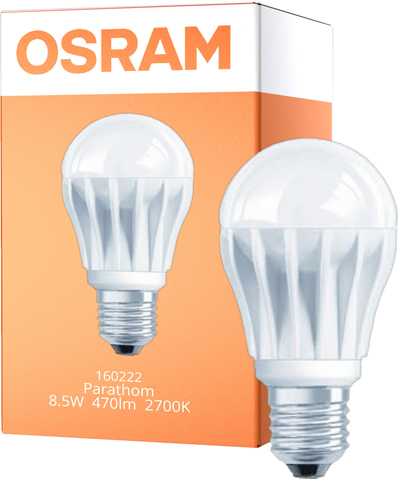
Box artwork, model code, wattage, lumens, and color temperature are all driven by the product attributes your teams already maintain in PIM, ERP, and brand systems. That puts every packshot under your control: correct a specification, refresh a design, or stand up a new SKU, and the image updates across every channel without a studio reshoot. Because each visual is composed on demand from a governed chain rather than distributed as a finished file, you can present packaging before the product physically exists, localize copy and compliance marks for each market, and keep production-ready assets out of competitors' reach.

Virtual packshot Dynamic product data Asset protection
Philips CorePro packaging, rendered from product data Philips MASTER PearLED packaging, rendered from product data OSRAM Parathom packaging, rendered from product data

Two brands, three SKUs, one packaging template — every detail driven by data, none photographed.

02

Channel-adaptive delivery from a single source.

Desktop PDP, mobile app, email, marketplace listing, and print catalog each require different dimensions, formats, and compression settings. A single chain produces every output from the same source asset at the correct specification for each destination.

WebP / AVIF / JPEG Marketplace specs Print-ready output
PDP 2000px · WebP
Mobile 750px · AVIF
Email 600px · JPEG
Amazon 2200px · JPEG
Print 300dpi · TIFF
Social 1080px · WebP
03

Live data rendered into every image.

Promotional overlays, pricing callouts, compliance labels, nutritional information, allergen symbols, and localized text are rendered directly into the image from live data sources. Campaign copy updates propagate across the full catalog without a manual export or retouching cycle.

GS1 data sources Dynamic annotations Localization
jsonacquire url[erp/stocklevel]
annotate text[global.stocklevel In Stock]
composite image[gs1/allergen-gluten]
sink format[webp],quality[90]
Integrates with
Shopify Magento SAP Akeneo Salesforce inRiver Amazon Walmart

Images that carry the data trading partners require.

GS1 image standards define how product photographs must be structured, named, and stored for exchange across retail networks. A complete GS1 image set includes planogram images for all six product faces, marketing images at specified angles, and informational images covering barcodes, ingredient lists, nutritional facts, allergen symbols, and regulatory information. Every major marketplace enforces compliance.

LiquiFire OS reads product data from GS1-standard sources, including the Global Data Synchronization Network, and generates compliant image sets automatically. When a product attribute changes in the source system, the rendered image reflects that change on the next request.

GTIN-based naming GDSN integration Barcode & QR generation Regulatory symbol rendering Nutritional & allergen compositing Planogram image sets
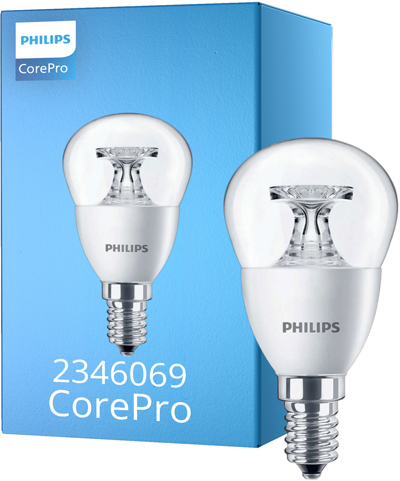
Image optimization that understands the browser, not just the file.

LiquiFire Resolve analyzes the requesting environment at render time, determining browser type, device pixel ratio, viewport dimensions, and network context, then delivers the image at the optimal scale, format, and compression for that specific request.

Product detail pages receive the correctly sized and formatted image for every user. Page speed improves, Core Web Vitals scores improve, and output consistency is maintained across every device class the organization supports.

  • Automatic format selection, WebP, AVIF, and JPEG, based on browser support
  • Dynamic scale based on device pixel ratio and viewport
  • Optional lazy-load integration with any LiquiFire Image Chain
  • WCAG-compliant output when combined with Viewer Suite

Product detail experiences built for enterprise scale.

Magnify, Zoom, Motion, and Collection viewers integrate directly with the Image Chain that drives them. LiquiFire Resolve is built into every module. WCAG compliant. Desktop and mobile.

ZAP

Zoom & Magnify

Seamless up-close inspection and inline hover magnification. Generated live from the chain at any zoom level.

Motion

360 & Multi-axis

Interactive 360-degree product sequences. Any frame in the sequence is available as a full zoomable image.

Surround

Full 360 immersive

GS1-compliant spin sets from 12 to 72 frames. Multi-row 360 for a three-dimensional effect. LiquiFire Resolve built in.

Catalog

Collection & series

Slide-show and portfolio presentation across a product set. Composable with Zoom, Magnify, or Motion.

Connects to the systems that already hold the catalog data.

LiquiFire OS does not require asset migration or adoption of a new system of record. The platform connects to existing PIM, ERP, DAM, and ecommerce infrastructure, reading product data at render time to produce the correct image for each request. Assets stay wherever they are.

Plug-ins are available for Shopify and Magento. For custom storefronts and headless architectures, the LiquiFire API handles integration over standard web protocols. We work directly with engineering teams to define the integration topology and delivery chain for each deployment.

Visual content is not owned by a single function.

The ecommerce manager, the digital marketing lead, and the IT architect each carry requirements that a fragmented set of specialized tools cannot satisfy consistently. LiquiFire OS serves all three from a single platform.

Ecommerce Manager

Consistent imagery across every listing, marketplace, and storefront.

LiquiFire OS eliminates inconsistency at its source: one chain produces every output from the same data, at the correct specification for each destination.

GS1 integrationVariant managementMarketplace compliance
Digital Marketing Lead

Campaign imagery that deploys across channels without a manual export cycle.

Promotional overlays and localized pricing rendered from live data mean campaign changes propagate across the full catalog without a retouching cycle.

Dynamic textChannel-adaptive formatsLiquiFire Resolve
Enterprise IT Architect

A single visual rendering layer that integrates with the existing stack.

LiquiFire OS connects over HTTPS, JSON, and XML. No SDK to adopt, no microservice to maintain, and no vendor lock-in on asset storage.

Flexible deploymentAPI-firstNo asset lock-in
Get Started

Visual content that scales with the catalog,
not the production budget.

We work with retail and ecommerce organizations to define the integration path from existing catalog infrastructure to a fully automated visual content layer.